

The CSA Z317.12:25 standard for infection prevention emphasizes the critical role of addressing biofilms in healthcare facilities to combat healthcare-associated infections (HAIs). Effective cleaning requires physical force and thermal interventions, rather than reliance solely on chemical disinfectants, to remove biofilms and protect patients and staff from persistent pathogens.
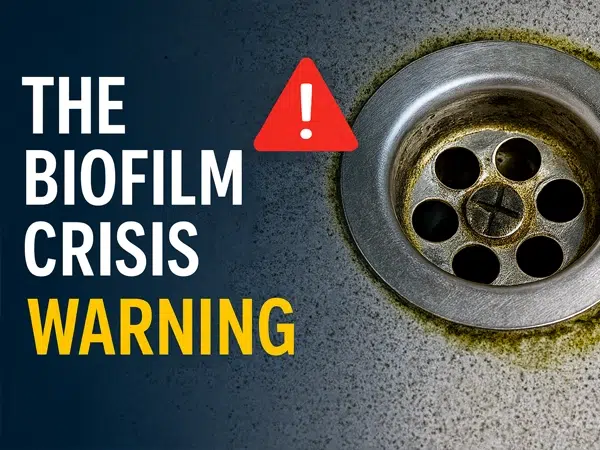
Healthcare Associated Infections HAIs represent a continuous, unacceptable risk to patients staff and visitors within Health Care Facilities HCFs. HCFs naturally harbor significantly higher concentrations of pathogens, including multidrug-resistant organisms MDROs. Effective cleaning and disinfecting protocols are the fundamental first line of defense. Yet, despite the best intentions and meticulous routine practices, pathogens often survive and persist. The primary reason for this failure is the presence of biofilms [Annex D.1].
A biofilm is defined simply as “a layer of microorganisms encased in an extracellular substance” [3.1]. This layer acts as a shield, providing profound protection [Annex D.1]. This defensive posture is staggeringly effective; biofilm embedded organisms are on average “1000 times harder to inactivate than planktonic bacteria” [Annex D.4.2]. The Canadian Standards Association CSA Z317.12:25 explicitly incorporates the role of both wet surface biofilm WSB and dry surface biofilm DSB in environmental cleaning and disinfecting protocols [Annex D.1]. For ICPs, understanding the nature of this unseen enemy and enforcing protocols that deliver physical, thermal force—rather than relying solely on chemical agents—is now a critical compliance and moral imperative.
Biofilms are ubiquitous reservoirs for microbial transmission throughout the healthcare environment [Annex D.1, Annex D.4.2]. The CSA standard mandates that protocols must address both forms of contamination to restrict the spread of resistant pathogens [Annex D.4.2].
DSB is a community of multi-species microorganisms embedded in a protective matrix, found on dry surfaces that endure repeated cycles of hydration and subsequent long periods of desiccation [Annex D.4.1].
WSB thrives on surfaces continuously bathed in flowing fluid, making healthcare plumbing systems high risk reservoirs [Annex D.3.1]. WSB consists of multi-species communities embedded within a matrix of exopolysaccharide and mobile genetic elements [Annex D.3.1].
The presence of biofilm means that chemical disinfectants alone are insufficient for HCF hygiene [Annex D.4.4, Annex D.3.4.3]. ICPs must enforce sequential cleaning protocols to achieve compliance with the CSA standard.
The standard is unequivocal, Cleaning must precede disinfection [4.5.3.1].
Since chemical penetration fails, the standard elevates physical action to the highest priority for environmental cleaning.
Drain biofilm eradication is so difficult that it “can require the replacement of the implicated sinks and/or the horizontal drainage system” [6.1 Note 2]. ICPs must establish rigorous SOPs for drain maintenance and remediation to prevent persistent MDRO transmission [6.1].
For patients positive for pathogenic microorganisms related to plumbing drainage (e.g., CPO, MDRO Pseudomonas, or C. auris), the HCF shall implement a standardized discharge/transfer SOP involving IPAC, EVS, and maintenance staff [6.4.1, 50]. Furthermore, the IPAC MDT should consider additional post-discharge drain maintenance, cleaning, and disinfecting for these patients [6.4.2].
To effectively combat entrenched WSB, particularly in outbreak scenarios, physical and thermal stress is necessary to break the matrix. The sources emphasize the need for alternative approaches involving “the destabilization of biofilms through an initial mechanical or biological pretreatment of drains… followed by thermal shock e.g., boiling water” [Annex D.3.5.1.1 Note, 106].
Clinical studies have validated the utility of thermal energy in this fight. A recent study showed the value of “drain steaming” and engineered drains in reducing total microbial CFU and opportunistic pathogens in drains [Annex D.3.5.1.1 Note, 105].
The standard details a remediation procedure example for existing P-trap drains that utilizes a chemical and enzymatic pretreatment phase followed by thermal shock [Annex D.3.5.1.2.1, Annex D.3.5.1.2.4].
Since DSB is invisible and manual friction is the key to removal, ICPs must implement robust Quality Management Systems QMS and utilize audit tools that verify process compliance, not just visual outcomes [14.1, 14.4.2.2.1].
The cleaning and disinfecting outcome audit plan “shall include at least a visual inspection and one other audit type” [14.4.2.2.1].
IPAC protocols must include drainage system surveillance, which “shall include directives for a) where and when to culture the drain” [6.5]. This surveillance is crucial during outbreaks or ongoing transmission where the environment is suspected to be involved [6.6, 14.6, Annex J.2].
Innovative technologies, when combined with manual cleaning and disinfection, are vital for continuous bioburden reduction [8.1, Annex D.5.1]. This combination works synergistically because physical cleaning “helps remove biofilms and debris that can harbour pathogens, while disinfecting kills remaining microorganisms” [Annex D.5.2].
ICPs must lead the evaluation of any new technology, assessing its safety, efficacy, life-cycle, and cost-benefit analysis in consultation with the IPAC MDT [8.2.2, 8.2.5].
The enduring presence of biofilm in Canadian HCFs confirms that relying on chemical disinfection alone is a futile strategy against the “1000 times harder” challenge [Annex D.4.2]. Full compliance with the CSA Z317.12:25 standard necessitates a disciplined adoption of non-chemical solutions emphasizing friction for surface cleaning and thermal shock for drain remediation [Annex D.4.4, Annex D.3.5.1.1 Note].To meet the mandatory requirement for providing the specified thermal shock in high-risk drain environments [Annex D.3.5.1.1 Note], HCFs must utilize dedicated equipment capable of delivering sustained, high-temperature output. The SteamKing Classic from Intersteam is the engineered solution necessary to execute the drain steaming procedure outlined in the CSA remediation protocols [Annex D.3.5.1.2.4], empowering HCFs to achieve verifiable, chemical-free eradication of persistent wet surface biofilm reservoirs and strengthen the defense against HAIs.
